AI Is Creating a New Workforce Powering the Infrastructure Economy
Expert Advice
Mar 31, 2026





Published January 19, 2026
 By NZero

The December 2025 compliance deadline for the UK’s Energy Savings Opportunity Scheme marked the end of another mandatory reporting cycle for large energy users. For organizations covered by ESOS, attention is now shifting away from audits and submissions and toward how identified opportunities are implemented, tracked, and validated. With energy costs remaining elevated and expectations around transparency increasing, ESOS is becoming less about completing a regulatory requirement and more about demonstrating credible follow through.
The UK’s Energy Savings Opportunity Scheme is a mandatory energy efficiency policy designed to ensure large organizations understand how they consume energy and where cost effective savings may exist. ESOS applies to organizations that meet specific size thresholds based on employee count, turnover, or balance sheet value, including UK operations of multinational companies.
Under the policy, covered organizations are required to measure total energy consumption across buildings, industrial processes, and transport activities. Energy audits must then be carried out to identify opportunities to improve efficiency and reduce costs. While ESOS does not mandate the implementation of specific measures or require organizations to achieve energy reduction targets, it is intended to surface savings that might otherwise remain hidden due to fragmented data or decentralized operations.
Although ESOS compliance notifications are submitted at the end of each cycle, the policy does not stop at filing. Organizations are expected to produce action plans that outline how identified energy saving opportunities will be addressed over time. These plans form the basis for demonstrating progress during the period between compliance cycles.
The next key milestone is the December 2026 ESOS Progress Report, which requires organizations to show what actions have been taken since the audits were completed. This has increased the importance of tracking implementation and outcomes, particularly as regulators and stakeholders pay closer attention to whether ESOS findings translate into real operational change.

For many organizations, ESOS action plans represent the most challenging part of the framework. Translating audit recommendations into measurable results often requires changes to processes, investment decisions, and ongoing performance monitoring.
Common challenges include:
As a result, organizations risk treating ESOS action plans as static documents rather than tools for continuous improvement.
While ESOS is an energy efficiency policy rather than a carbon reporting requirement, its outputs increasingly intersect with sustainability and ESG reporting. Energy consumption data collected for ESOS is often reused to support Scope 1 and Scope 2 emissions calculations, and in some cases informs Scope 3 assessments.
As expectations around carbon accounting accuracy grow, the quality and consistency of energy data becomes more important. Organizations that strengthen energy data governance through ESOS are often better positioned to meet broader reporting requirements and respond to investor and customer scrutiny.
With the next progress reporting deadline approaching, organizations are focusing on how to demonstrate credible implementation rather than intent alone. This includes validating energy savings over time, linking efficiency measures to cost control outcomes, and ensuring that energy data supports both regulatory and sustainability objectives.
Treating ESOS as an ongoing management process rather than a periodic compliance exercise can help organizations reduce energy risk, improve financial performance, and prepare for future regulatory developments.
The UK’s ESOS policy places increasing emphasis on what organizations do after audits are completed. As action plans and progress reporting move into focus, the ability to measure, validate, and communicate outcomes is becoming central to compliance. Organizations that embed ESOS into their broader energy and sustainability strategies are better equipped to manage rising costs and evolving reporting expectations.
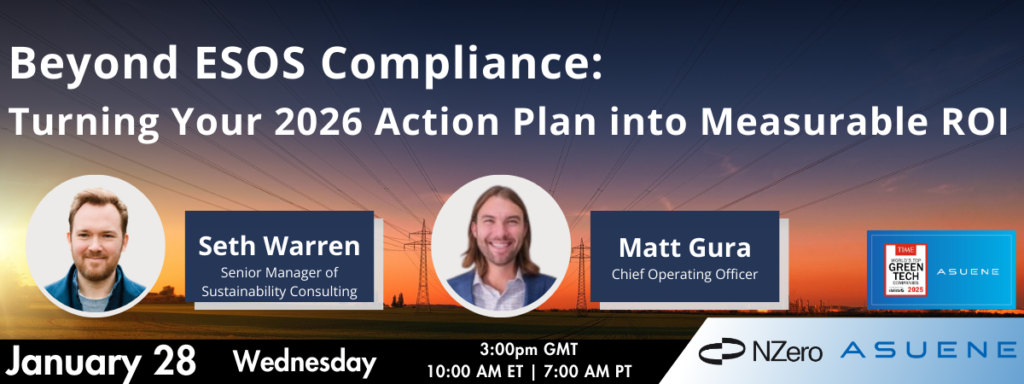
To explore how organizations are turning ESOS action plans into measurable results, NZero will be hosting an upcoming webinar co hosted with ASUENE, featuring our COO Matt Gura and Seth Warren of ASUENE, focused on execution, validation, and energy data readiness ahead of the 2026 reporting milestone.